Your Body Says Panic, Your Mind Says Fine | Understanding Work Anxiety
If you’ve ever found yourself in a situation where your mind is telling you everything is okay, but your body is screaming that something is very wrong, you’re not alone. This body-mind disconnect is one of the most confusing and exhausting aspects of work stress anxiety, especially for high-achieving women juggling careers, caregiving responsibilities, and the pressure to excel at everything.
The Mystery of High-Functioning Anxiety
One of the most striking moments in this episode with Elka Scholz is when she describes having a full-blown anxiety attack while mentally feeling completely fine. Her body was in panic mode—the physical sensations were undeniable—yet her mind insisted she was okay. “You guys, I’m fine,” she told her daughter and mother, “but my body is freaking out.”
This is the paradox of high-functioning anxiety. On the surface, everything looks good. You’re meeting deadlines, managing projects, showing up for your team. But underneath, your nervous system is running on overdrive, and the signals your body is sending are being ignored or overridden by sheer willpower and determination.
The problem? Your body doesn’t lie. And when you ignore what it’s telling you, that’s when anxiety can evolve into something more serious—burnout.
The 11 Hidden Sources of Anxiety
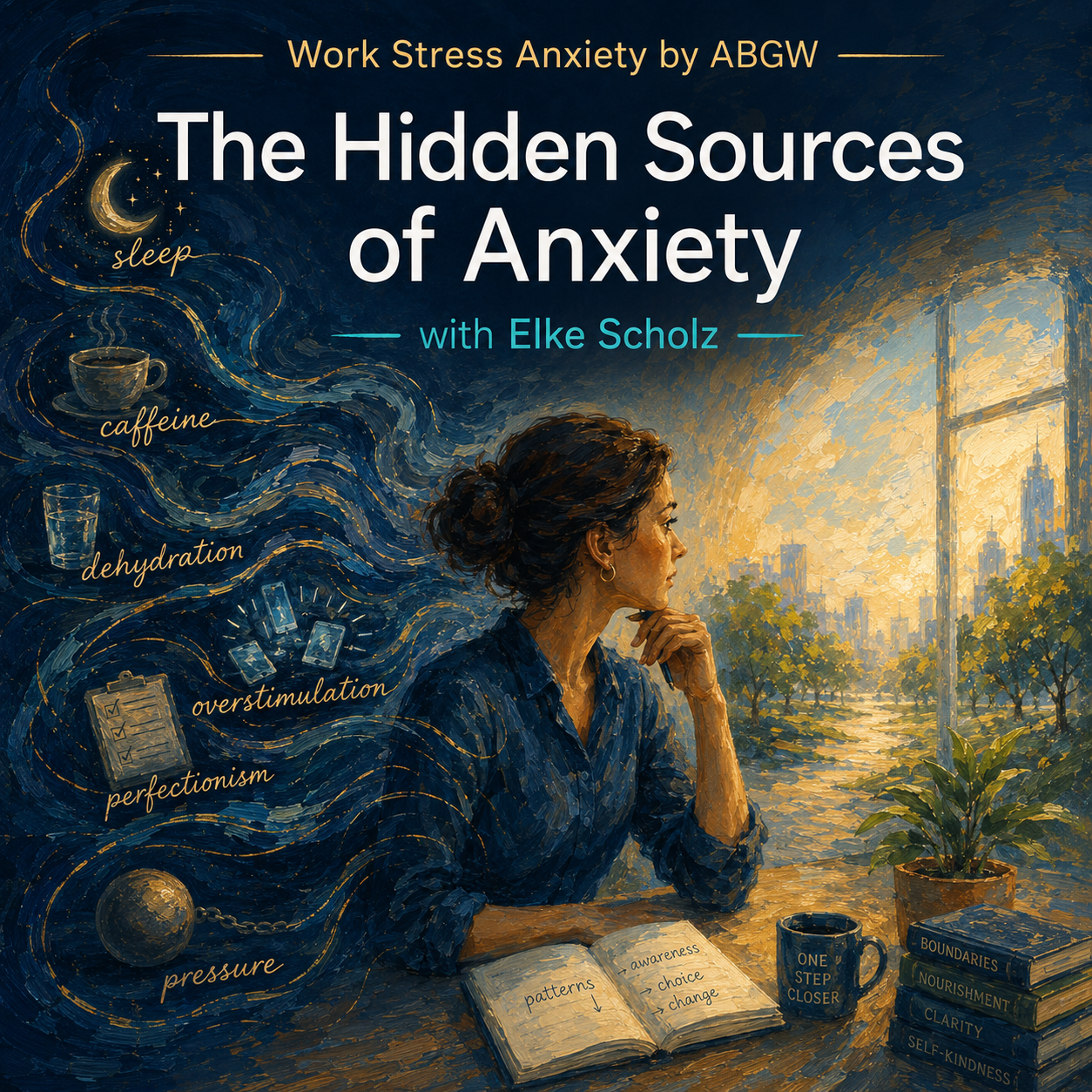
Rather than treating anxiety as one monolithic problem, Elka approaches it like a detective, uncovering the different sources that might be fueling your stress. Once you understand these sources, you can work through them like a checklist, identifying which ones are contributing to your anxiety.
Physical and Biochemical Triggers
Many of us overlook the physical drivers of anxiety because they seem too simple or too obvious. But they’re often the most powerful:
Substances and What We Consume
Your morning coffee, that glass of wine after work, the sugar in your afternoon snack—these all affect your nervous system more than you might realize. Caffeine sensitivity is highly individual. While some people can drink espresso at night and fall asleep easily, others (like Elka) will be awake all night if they have chocolate after 3:30 PM. The key is learning your body’s unique metabolism.
Alcohol is particularly tricky. It might feel relaxing in the moment, but it depletes your body of water and actually creates anxiety later. The same goes for sugar—those crashes leave your nervous system vulnerable and anxious.
Sleep Debt
Cheryl and Elka both emphasize this point: sleep is non-negotiable. Just two or three nights of poor sleep can tank your mental health. This isn’t weakness; it’s biology. When you’re sleep-deprived, your emotional resilience plummets, and anxiety becomes harder to manage. Protecting your sleep isn’t a luxury—it’s an act of self-respect.
Food Sensitivities
This one often goes undetected. You might not have a full allergic reaction, but your body might struggle to break down certain foods, triggering a full anxiety response. Elka discovered that avocados, almonds, and mushrooms triggered her body’s anxiety response. When your energy goes into processing foods your body finds difficult, you have less energy for everything else. If you’re feeling anxious and can’t pinpoint why, it might be worth exploring food sensitivities with a professional.
Hormonal and Blood Markers
If your finances are fine, your relationship is solid, and you’re still feeling like you’re “freaking out,” it’s time to get some blood work done. Iron deficiency can masquerade as depression and anxiety. Thyroid conditions can create physical anxiety symptoms that feel completely disconnected from your mental state. These aren’t character flaws—they’re medical realities that deserve professional attention.
Environmental and Lifestyle Triggers
Overstimulation and FOMO
We didn’t evolve with smartphones, and our nervous systems know it. That device in your pocket isn’t really a phone—it’s one of the most powerful computers ever invented, capable of keeping you in constant alert mode.
Elka describes the striking difference between frantic scrolling and the calm that comes from quiet, nature, and gentle sensory grounding. She’s noticed how students on TikTok are literally shaking without realizing it—their nervous systems are being overstimulated by the constant flashing lights, quick cuts, and rapid-fire content. We’re not wired for that level of stimulation, yet many of us are exposing ourselves to it for hours each day.
The solution? Create boundaries. Keep your phone out of the bedroom. Spend time in nature. Let yourself experience silence and stillness.
Reality-Based Stressors
Deadlines, presentations, interviews, performance reviews, medical appointments—these are real sources of anxiety. They’re not imagined, and they deserve acknowledgment. But here’s what Cheryl discovered during a job interview: sometimes humor and self-compassion can shift the entire experience. When the projector malfunctioned during her presentation, she laughed at the situation, got up to help fix it, and her anxiety dissolved within seconds. Finding lightness in high-stakes moments can be transformative.
Psychological and Belief-Based Triggers
The “Shoulds” and Perfectionism
As high-achieving women, many of us operate from a place of “I should.” I should be a good mother. I should excel at work. I should take care of everyone else first. These cultural and social beliefs create constant internal pressure.
The challenge is finding balance. It’s okay to have high standards and aspire for growth. But can you also know that you’re “good enough”? That you’re adding value? That showing up imperfectly is still showing up? This is the ongoing battle for many of us, and it’s a significant source of anxiety.
Self-Doubt and Inner Criticism
That inner voice—the one that questions whether you’re capable, whether you deserve success, whether you’re doing it right—fuels anxiety. Perfectionism and self-doubt are closely linked, and both are common in high-functioning women.
Being Highly Sensitive
If you’re a highly sensitive person, you likely experience anxiety and depression more acutely. But here’s the flip side: you also have remarkable intuition, deep empathy, and a profound connection to beauty and the arts. Understanding this trait as a strength, not a weakness, changes how you approach your anxiety.
Memories and Trauma
Sometimes anxiety is triggered by memories or past trauma—some we’re aware of, others we’re not. A particular smell, a certain tone of voice, or even a color can trigger a somatic body response that feels disconnected from any conscious memory. This is where professional support becomes invaluable.
The Path Forward
Understanding the sources of your anxiety is the first step toward managing it. You’re not broken, and you’re not “just anxious.” Your body is sending you important information about what it needs—more sleep, less caffeine, quieter environments, gentler self-talk, professional support, or medical investigation.
The goal isn’t to eliminate anxiety entirely. It’s to listen to what your body is telling you, address the underlying causes, and build resilience so that anxiety doesn’t evolve into burnout.
Ready to dive deeper into these insights? Listen to the full episode with Elka Scholz to explore the 11 sources of anxiety in detail, learn the 2-minute nervous system reset you can use at your desk, and discover how high-achieving women can honor both their ambitions and their wellbeing. Your body has been trying to tell you something—it’s time to listen.