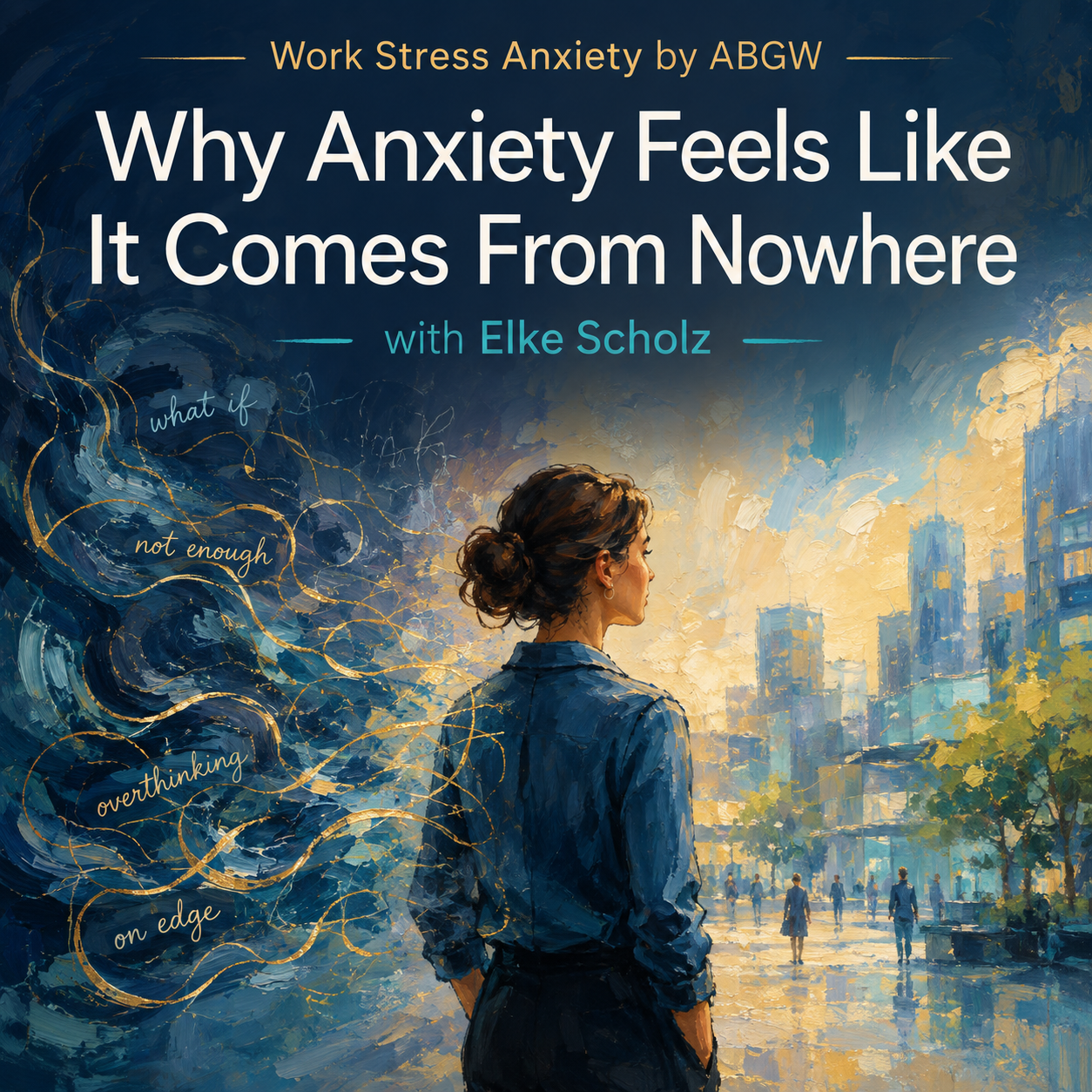
Why Anxiety Strikes Without Warning: Understanding Your Nervous System's Hidden Messages
If you’ve ever been going about your day—doing something you’ve done a hundred times before, feeling completely safe—and suddenly your chest tightens, your breath becomes shallow, and anxiety washes over you without warning, you’re not alone. And here’s the thing: it probably wasn’t actually random.
This is the conversation we’re diving into today, and it’s one that resonates deeply with so many high-achieving women who keep all the boxes ticked while feeling uneasy on the inside.
The Hidden Secret So Many of Us Keep
Cheryl opens this episode by sharing something deeply personal: as a teenager, she experienced significant anxiety but didn’t know that’s what it was called. She just thought something was wrong with her. Even though people saw her as outgoing and confident on the outside, something had shifted inside. When her mum asked, “You used to be such a happy-go-lucky girl—what’s happened to you?” it only deepened the confusion and shame.
Elke echoes this experience. Growing up, she felt like she was hiding a big secret because she didn’t feel well. The thing about anxiety is that it’s emotionally draining, and when you’re high-functioning, when you’re the one who always has it together, admitting that you’re struggling can feel impossible.
But here’s what we need to understand: anxiety isn’t a character flaw. It’s not something wrong with you. And the first step to managing it is understanding what it actually is.
Breaking Down the Confusion: Fear, Anxiety, Stress, and Worry
One of the most helpful things Elke does in this conversation is clarify the terms we often use interchangeably—terms that actually mean quite different things.
Fear is immediate. It’s your body’s alarm system telling you to act right now. Elke shares a vivid example: she was walking on a country road when a skunk started chasing her, thumping (a sign it was about to spray). That’s real fear. Your body springs into action because there’s an immediate threat.
Anxiety, on the other hand, is anticipatory. It’s your mind scanning ahead, imagining what might happen next. Here’s where it gets interesting: anxiety can actually be useful information. After that skunk encounter, Elke experienced anticipatory anxiety whenever she walked on that road—even though the skunk never appeared again. But that anxiety was tapping her on the shoulder, saying, “Pay attention to something.”
Think about it this way: if you wake up feeling anxious about money, that’s your nervous system signaling you to check your finances. Maybe there’s a bill you missed. If you’re anxious about your health, it might be time to schedule that appointment you’ve been putting off. Anxiety becomes a problem when we let it spiral into worry.
Worry is repetitive, circular thinking. Elke points out that the word “worry” actually comes from an old English word meaning “to strangle.” Worry is what happens when we take that initial signal from anxiety and let it run around in our heads endlessly, draining our energy without moving us toward a solution.
Stress and anxiety often get lumped together, but the truth is, they don’t have to be diagnosed separately. What matters is recognizing the physical signals: butterflies in your stomach, changes in appetite, sleep disruption, fatigue, weight changes, or even obsessive-compulsive habits. Your body is speaking to you. The question is: are you listening?
The Mystery of “Random” Anxiety (Spoiler: It’s Usually Not Random)
So why does anxiety feel like it comes out of nowhere? Why can you do something safely a hundred times and then suddenly feel that panic rising in your chest?
The answer is layered—literally.
Elke explains that anxiety rarely has just one cause. Instead, it’s like stacking small stressors on top of each other until you hit a tipping point. You might be slightly dehydrated (which your brain interprets as a signal of danger, releasing anxiety). That brings you from a 0 to a 2 on the anxiety scale. Then something stressful happens at work—you’re now at a 4 or 5. Then you pick up anxious energy from someone around you, or there’s something nagging at the back of your mind that you haven’t fully processed. Suddenly, you’re at a 7 or 8, and it feels like anxiety came out of nowhere.
But it didn’t. It was the accumulation of multiple small things that your nervous system was trying to tell you about.
The Dehydration Connection (And Why Your Morning Routine Matters)
Here’s a practical insight that might seem simple but is genuinely game-changing: dehydration triggers anxiety.
When we’re dehydrated, our brain sends signals of anxiety. Most of us are already slightly dehydrated throughout the day because we don’t drink enough water. But here’s the kicker: we’re also dehydrated when we wake up. We’ve been sleeping six to eight hours without any fluids, and we’ve been sweating through the night.
So what do most of us do when we wake up? We reach for coffee or tea—stimulants that actually deplete our body of water. We scroll through our phones. We do anything but give our body what it actually needs.
Elke’s solution is beautifully simple: keep water by your bedside. The first thing you do when you wake up is drink some water—not tons, just enough to signal to your brain that you’re okay. Many of her clients report that this one change alone reduces their morning anxiety significantly.
The Anxiety Scale: Your Personal Awareness Tool
One of the most practical tools Elke introduces is a simple 0-10 anxiety scale. You don’t need fancy equipment or complicated assessments. If you can count from zero to ten, you can use this tool.
- 0 = No disturbance. You’re calm and okay.
- 10 = Short-circuiting. You can’t put a thought together. You’re completely dysregulated.
The key insight? Everyone’s numbers are different. This isn’t a test. It’s about awareness.
Right now, Elke explains, she’s probably at about a 1 or 1.5—awake, engaged, and active, but not in a state of deep relaxation. That’s perfectly fine. The goal isn’t to be at zero all the time. The goal is to know where you are.
Why? Because awareness is where change begins. When you know your baseline anxiety level, you can notice when you’re climbing. When you understand what brings you from a 2 to a 5, you can make adjustments. You can drink water. You can step away from a stressful situation. You can set a boundary at work before you hit overload.
Setting Boundaries Before You Break
This is crucial for high-functioning women: you need to know your limits before you hit them.
Elke shares that she’s learned she can only handle one major thing happening at a time. When someone’s working on her house, she doesn’t schedule interviews or client sessions. She calls it “peace on earth”—nothing else happening—so she can be fully present.
This isn’t about being rigid or inflexible. It’s about self-awareness and self-protection. When you understand your anxiety scale and what stacks your stressors, you can make choices that prevent burnout instead of managing it after the fact.
The Bottom Line: Anxiety Is Information, Not a Flaw
Perhaps the most transformative idea in this conversation is this: What if anxiety isn’t something to be ashamed of, but something to befriend?
Anxiety is your nervous system’s way of saying, “Hey, pay attention to something.” It might be your finances, your health, your environment, or your boundaries. It might be dehydration or lack of sleep or picking up energy from people around you.
The shame isn’t the answer. Understanding is.
For high-achieving women who’ve spent years pushing through, ignoring signals, and keeping it all together, this shift in perspective can be liberating. Your anxiety isn’t proof that you’re failing. It’s information. And once you understand what it’s telling you, you can actually do something about it.
Ready to dive deeper into these tools and hear more of Elke’s insights? Listen to the full episode of Work Stress Anxiety now. You’ll discover more practical strategies for nervous system regulation, learn how to identify your personal anxiety triggers, and get the support you deserve as a high-functioning woman navigating work stress.
Have your own anxiety story to share? We’d love to hear from you. Contact us on WhatsApp at +447485622662 and let us know what resonates with you from this episode.