How Leaders Use Play to Cut Stress and Boost Productivity
Related Episode
How Leaders Use Play To Cut Stress | Nervous System ResetIf you’re a high-achieving woman in the workplace, you’ve probably heard it all. Work harder. Be more disciplined. Follow another system. Implement another policy. Hit another target.
But what if I told you that the most powerful thing leaders can do to improve productivity, creativity, and employee retention has almost nothing to do with any of that?
What if it starts with play?
The Fish Rots From the Head
There’s a saying I come back to again and again: the fish rots from the head. This means that the culture, energy, and values of an organization flow directly from leadership.
If your workplace feels rigid, anxious, and joyless, that’s not an accident—it’s a reflection of what leaders are tolerating and, often, modeling.
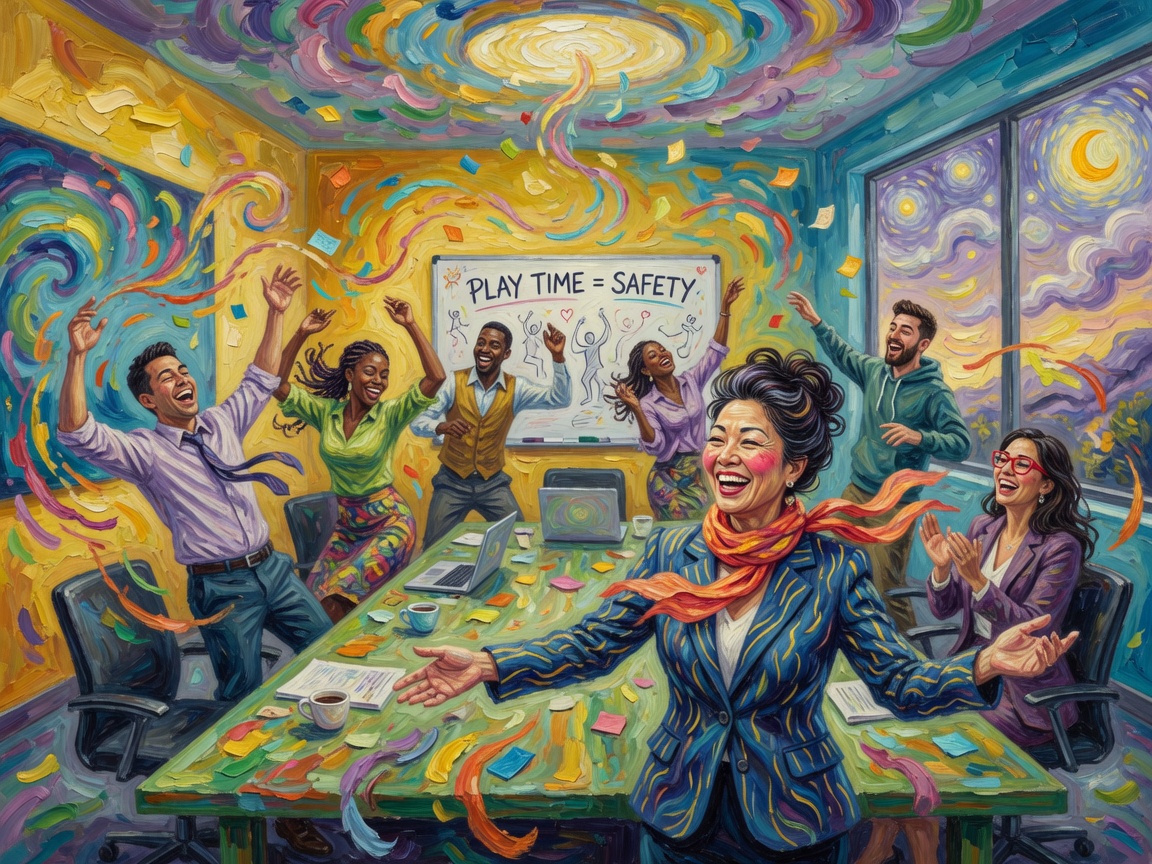
The flip side is equally true. When leaders actively foster an environment where play, lightness, and creativity are welcomed, the entire team feels the permission to show up differently. They feel safer. More creative. More human.
This isn’t soft leadership. This is strategic leadership. And I love it because it means there is likely to be more outrageous, unconscious joy about the place.
Companies like Google, Zappos, and LEGO have been quietly proving this for years. They’ve built play into their cultures—not as a perk or a distraction, but as a core part of how they operate. And their results speak for themselves: higher productivity, better problem-solving, stronger retention, and teams that actually want to be there.
Why Your Brain Works Better When It’s Playing
Here’s the neuroscience part, because leaders care about outcomes: when you’re in a playful state, your brain is more creative, more solution-focused, and more collaborative. When you’re stressed—stuck in that fight-or-flight mode with cortisol flooding your system—your brain gets locked into rigid patterns. You can’t see the forest for the trees.
Think about it. When you’ve lost your keys and you’re frantically searching while your stress levels spike, you can’t remember where you put them. But the moment you shift your attention, relax a bit, and let your mind wander? The answer comes to you.
That’s play. That’s what happens when your nervous system shifts out of threat mode.
Play lowers cortisol. It activates the parasympathetic nervous system. It literally makes your team think clearer, collaborate better, and stay creative when deadlines hit. It’s not frivolous. It’s biology.
The Real Cost of Rigid Workplaces
Here’s what we’re up against: many workplaces have spent decades reinforcing rigidity. Control. Punishment for stepping out of line. A culture where lightness is seen as unprofessional, where people who “snitch” on colleagues for having fun actually have power, where being serious is equated with being competent.
This is exhausting. And it’s expensive.
When people can’t be themselves at work, when they have to maintain a persona that doesn’t feel authentic, their nervous systems stay activated. They’re in constant performance mode. Over time, this leads to burnout, resentment, and the loss of your best people—the ones who have options and choose to leave.
Conversely, when leaders create psychological safety—when people know they can be a little goofy, take a creative risk, or suggest a wild idea without fear of retaliation—something shifts. People relax. Their brains work better. They stay.
Practical Play Ideas Leaders Can Actually Use
Here’s the beautiful part: you don’t need a big budget or a corporate retreat to introduce play into your workplace. You just need visible permission from leadership.
The One-Minute Dance Party
Blast some fun music. Everyone gets out of their chairs. You move around, do something goofy, and reset your energy. One minute. Done. No derailing the day, but everyone’s nervous system just got a little reset.
Recurring Small Games
Work with your team to design simple, recurring games or activities. It could be a whiteboard game. A quick scrum game. A daily challenge. The key is that people helped design it, so they feel ownership. And it gives them something to look forward to.
Laughter Practice
Here’s something you can do alone, and it actually works: trigger laughter before you even get out of bed. Your brain doesn’t recognize the difference between real laughter and fake laughter. Start chuckling to yourself. Within moments, you’ll likely be in full-body laughter. This instantly shifts your brain chemistry and sets you up for a better day.
Movement Throughout the Day
Don’t sit all day. Stand up. Bounce around. Do the “horse lips” breathing exercise (yes, it sounds silly—that’s the point). Get your lymphatic system moving. When your body is in motion, your brain is more active and less stagnant.
How to Pitch Play to Decision-Makers
If you’re an employee wanting to suggest more playfulness in your workplace, or a leader wanting to champion this with your board, use language that lands:
- Play equals increased productivity
- Play reduces burnout and improves retention
- Play activates creativity and problem-solving
- Play lowers cortisol and activates the parasympathetic nervous system
You can back this up with research. Google it. Use AI to generate a report on the neuroscience of play and productivity. Make the business case clear: this isn’t about being nice. It’s about ROI.
A Daily Prescription for Busy Adults
If you’re exhausted and overwhelmed, here’s a realistic daily practice:
-
Start with laughter. Before you get out of bed, trigger laughter. Full-body laughter. It takes two minutes.
-
Move throughout the day. Stand, bounce, shake, stretch. Get your body flowing. Even low bouncing activates your lymphatic system and changes your brain state.
-
Use vagus nerve techniques. The horse lips exercise, belly breathing, or other calming techniques take 30 seconds and can be done anywhere—at your desk, in a meeting, on the train.
-
Build in micro-play moments. A quick game with a colleague. A funny text. A moment of lightness. These aren’t distractions; they’re recalibration.
The Culture Shift Starts With You
Real talk: if your workplace is rigid and punitive, changing the culture won’t happen overnight. But it starts with people like you—people willing to bring lightness, permission, and playfulness into the space, even when it’s not yet the norm.
Band together. Use the language of productivity and outcomes. Show your leadership team the research. And start small. One dance party. One game. One moment of genuine laughter.
Because here’s what I know: people want to work in places where they can be themselves. Leaders want teams that are creative, loyal, and engaged. And play is the bridge between what we want and what we’re actually creating.
The fish rots from the head, but it also heals from the head. What kind of culture are you going to foster?
What’s one playful reset you’d actually try at work? Listen to the full episode with Zander Phelps to dive deeper into the neuroscience of play, get more practical ideas, and hear how real leaders are transforming their workplace cultures. Because your success shouldn’t cost you your peace of mind—and it doesn’t have to.