Urgency Addiction: Finding Calm in a Chaotic World
Related Episode
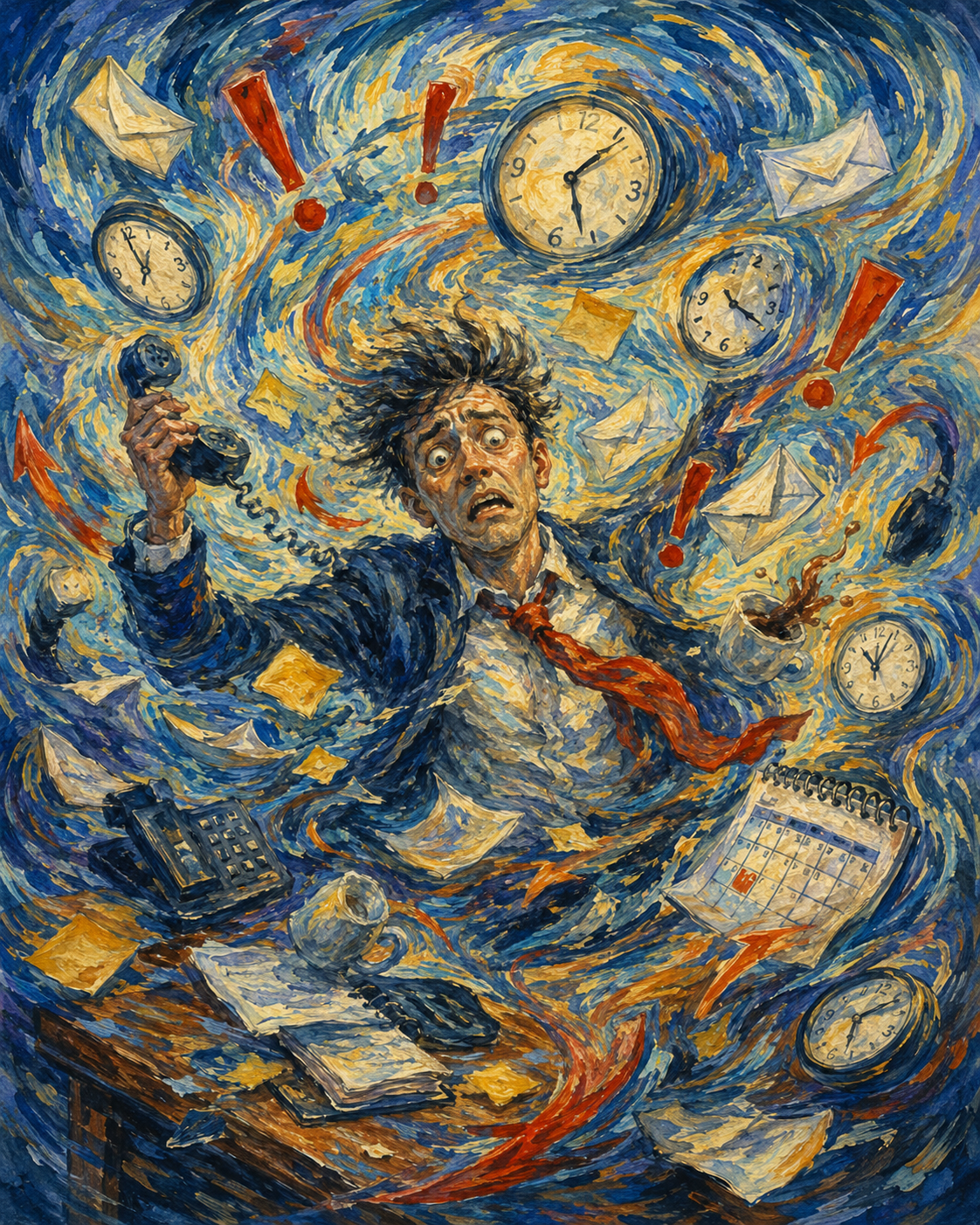
Urgency Addiction: Finding Calm in a Chaotic WorldWelcome back to a moment of gentle reflection. If you’re reading this, chances are you’ve felt it—that persistent weight of urgency pressing down on your shoulders. I hate the word personally, as not much is really urgent. People just tend to have an addiction to it. The endless stream of emails, the back-to-back meetings, the decisions that feel like they can’t wait. As we navigate our careers and lives, many of us have become unknowingly addicted to urgency itself.
Understanding Urgency Addiction
Let’s be honest: urgency has become the default setting for many high-achieving women. We live in a world that constantly signals that everything needs to be done now. Our bodies including mine, respond accordingly, flooding with stress hormones, our hearts racing, our minds spinning faster than we can keep up with.
But here’s what we often miss—not everything that feels urgent actually is urgent.
Urgency addiction is that pervasive feeling that everything around us is an emergency.
It’s the belief that we must respond immediately, that delays mean failure, that slowing down is a luxury we can’t afford. And while some urgency is genuinely necessary in our work lives, most of it is just… noise.
The problem? Our nervous systems can’t tell the difference between a real threat and a perceived one. When your brain registers urgency—whether it’s a critical client email or a routine meeting reminder—your body responds as if you’re in danger. Your sympathetic nervous system kicks into high gear. Cortisol floods your system. You’re in fight-or-flight mode.
And if you’re living in this state all day, every day, you’re exhausting yourself.
How Urgency Becomes a Habit
Many of us have been rewarded for responding to urgency. We’ve gotten promotions, praise, and recognition for our ability to “handle pressure” and “turn things around quickly.” We’ve internalised the message that our worth is tied to our responsiveness. But is it our real worth?
Over time, this creates a negative pattern. Our nervous systems become conditioned to seek that spike of adrenaline. We start feeling productive only when we’re in crisis mode. Calm feels boring. Slow feels irresponsible. And suddenly, we’re unconsciously creating urgency where none exists—because that’s what feels familiar.
This is urgency addiction in its truest form.
The irony? This constant state of high alert actually makes us less effective, not more. When we’re in fight-or-flight mode, our prefrontal cortex—the part of our brain responsible for creative thinking, strategic planning, and wise decision-making—goes offline. We become reactive instead of proactive. We make decisions we later regret. We say things we wish we could take back.
The Body Keeps Score
Your body is incredibly intelligent. It’s been sending you signals all along—the tight shoulders, the racing heart, the difficulty sleeping, the emotional exhaustion. These aren’t character flaws. They’re your nervous system’s way of telling you that it’s overwhelmed.
When we treat everything as an emergency, we’re essentially asking our bodies to maintain a state of high alert indefinitely. That’s not sustainable. And as many of you know, the cost of pushing through without addressing the underlying urgency addiction is burnout.
Stepping Back to See the Whole Picture
Imagine you’re standing inches away from a painting. All you can see are brushstrokes, texture, and fragments of colour. You can’t understand the full composition or the artist’s intent. But if you step back—even just a few feet—suddenly the entire picture comes into focus.
The same principle applies to our work and our stress.
When we’re caught in the throes of urgency, we lose perspective. Everything feels equally important. Everything feels like it needs immediate attention. But when we step back, we can see the actual landscape of our work. We can distinguish between what’s truly critical and what’s just noise. We can make conscious choices instead of reactive ones.
This is why perspective is so powerful in managing urgency addiction. Sorry I live for this stuff!
A Simple 60-Second Experiment
Here’s a practical tool you can use the next time you feel that spike of urgency:
Pause. When you notice the rush, the racing thoughts, or the impulse to respond immediately, simply pause. Take one conscious breath.
Ask yourself: “Is this actually an emergency, or does it just feel like one?”
Wait 60 seconds. Don’t respond. Don’t act. Just observe the urgency without feeding it.
Notice what happens. Often, that sense of emergency begins to dissolve. The email can wait another hour. The meeting can be rescheduled. The decision doesn’t need to be made this very second.
This simple experiment does something powerful: it creates space between stimulus and response. And in that space, you reclaim your power. You move from being controlled by urgency to consciously choosing your actions.
The Power of Awareness
One of the most transformative tools available to us is awareness. That is why it is the first letter of the ABGW Method.
Simply noticing that you’re caught in urgency addiction is the first step toward changing it. You don’t have to fix everything at once. You don’t have to overhaul your entire work life.
Small shifts matter. A single moment where you pause instead of react. A single decision where you choose calm over crisis. These moments accumulate. Over time, they reshape your nervous system, your productivity, and your sense of well-being.
Remember, even the smallest change in how you feel can lead to significant transformation in your life. One of the best thing is that you can then see that you don’t need that whirwind of stress in your life.
A Gentle Reminder
If you find yourself feeling overwhelmed, remember that seeking professional support is a sign of strength, not weakness. Whether it’s working with a coach, a therapist, or a trusted mentor, reaching out for help is one of the most constructive steps you can take.
You don’t have to white-knuckle your way through this. There’s another way—a way that honors both your ambition and your humanity.
Ready to Go Deeper?
This episode explores these themes in much more detail, with guided reflections and additional insights on managing urgency in your work life. Listen to the full episode now to get the complete experience and discover more tools for finding calm in a chaotic world.
And if this resonates with you, we’d love to hear from you. Reach out to us on WhatsApp at +447485622662 or send us a text—let us know what you think about this episode and what topics you’d like us to explore next.
Tomorrow, we’ll be tackling another voice that shows up for high-achieving women: “I should be coping better.” Until then, take a moment to notice your feelings and embrace the journey of self-awareness.
You’re doing better than you think.