The Power of Perspective: Why "This Is Just How It Is" Might Be Holding You Back
Related Episode
The Power of Perspective: Seeing Beyond the FamiliarWhen Familiarity Becomes a Prison
If you’re a high-achieving woman navigating the relentless demands of work, you’ve probably heard yourself—or others—say it: “This is just how it is.”
Maybe it’s the 2:03 a.m. wake-ups, replaying conversations from meetings that ended hours ago. Maybe it’s the constant hum of anxiety beneath your accomplishments, that nagging feeling that your success comes at an unsustainable cost. Perhaps it’s the emotional exhaustion that no amount of weekend rest seems to touch, or the way you’ve normalised lying awake worrying about things you can’t control.
These patterns feel inevitable. They feel like the natural consequence of ambition, responsibility, and caring deeply about your work. But here’s what we often miss: what feels inevitable is frequently just what’s familiar.
There’s an important distinction between these two things, and recognizing it could be transformative for your wellbeing.
The Trap of the Familiar
Our brains are incredibly efficient at pattern recognition. They notice what happens repeatedly and start treating it as truth—as “the way things are.” When you’ve spent months or years operating under stress, when burnout has become your baseline, when anxiety at work is so woven into your daily experience that you barely notice it anymore, your brain starts to whisper: This is normal. This is just how high-achievers live.
But familiarity is not the same as inevitability.
The stress you’re experiencing isn’t inevitable because you’re ambitious. The anxiety isn’t inevitable because you care about doing excellent work. The emotional exhaustion isn’t inevitable because you’re successful. These things have become familiar—they’re part of your established pattern—but they’re not written into the fabric of your existence.
This distinction matters enormously because it opens a door. If something is truly inevitable, there’s nothing you can do. But if something is merely familiar, if it’s simply the pattern you’ve been repeating, then there are choices available to you.
Stepping Back: The Power of Dissociation
One of the most powerful tools for breaking free from the “this is just how it is” mindset is what I call dissociation—and I want to be clear about what I mean by that term.
In this context, dissociation isn’t about disconnecting from reality or checking out emotionally. Instead, it’s about stepping back from your situation just enough to see it clearly. It’s like zooming out on a map so you can see the full landscape instead of being stuck in one small neighbourhood.
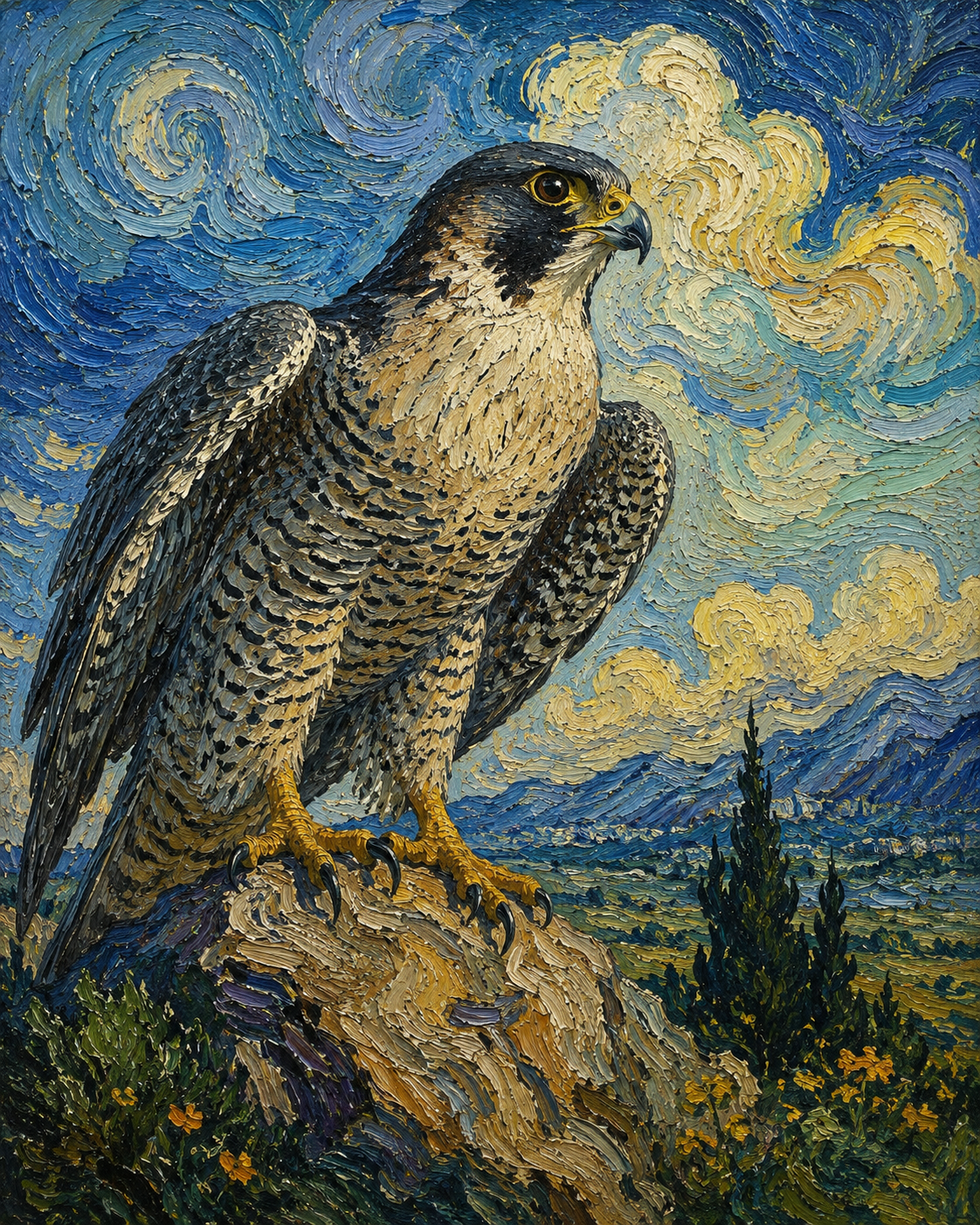
One metaphor I often use in my hypnothreapy is the peregrine falcon.
It is beautiful, compact, muscular and light. It understands something many of us forget: power is not always about effort.
Yes, it can dive at around 240 mph, making it one of nature’s most extraordinary examples of speed and precision. But what fascinates me more is its ability to stay aloft for hours by working with gravity, wind and air currents rather than fighting them.
For me, that makes the peregrine falcon a powerful metaphor for dissociation in its healthier, therapeutic sense: the ability to rise above the immediate intensity of what is happening, gain distance, observe the ground below, and see the wider pattern.
Let me be clear: I don’t mean disconnecting from reality. It means creating enough space from the situation to stop being swallowed by it.
Sometimes the nervous system needs altitude before it can find clarity.
You know it come your own experiences, when you’re in the thick of stress and burnout, you’re living and breathing inside the problem. You’re so close to it that it fills your entire field of vision. Your anxious thoughts feel like facts. Your exhaustion feels permanent. The pressure feels non-negotiable.
But when you step back—when you create some psychological distance from the situation—something shifts. You can start to see the bigger picture. You can recognise patterns you couldn’t see before. You can distinguish between what’s genuinely required and what you’ve simply accepted as required.
Here’s how this works in practice: Instead of being the person lying awake at 2:03 a.m. in a panic, you become the observer noticing that this person is lying awake in a panic. Instead of being consumed by workplace anxiety, you step back and observe the anxiety with curiosity rather than judgment. This subtle shift in perspective is incredibly powerful.
From this observer position, you can ask different questions:
- What’s actually happening here?
- What am I believing about this situation?
- What would change if I looked at this differently?
- What am I accepting as inevitable that might actually be a choice?
The Question That Changes Everything
As we navigate this work of shifting perspective, there’s one question I invite you to sit with. It’s deceptively simple, but it has the power to cut through years of accumulated stress and resignation:
What would respect look like here?
This question works because it bypasses the familiar narratives. It doesn’t ask, “What should I do?” (which often leads to the same stressed, overwhelmed answers). It doesn’t ask, “What does success require?” (which might reinforce the very patterns that are exhausting you).
Instead, it asks: What would it look like to treat yourself with respect? What would it look like to respect your time, your energy, your wellbeing, your humanity?
When you ask this question honestly, you often find that respect looks quite different from what you’ve been doing. Respect might look like boundaries. It might look like saying no. It might look like asking for help. It might look like adjusting your expectations. It might look like seeking professional support.
And here’s something important: seeking professional support is not a sign of failure. It’s a wise choice when the weight of the world feels too heavy.
There’s no medal for carrying everything alone. There’s no prize for white-knuckling your way through burnout. But there is profound freedom in recognizing when you need help and having the courage to ask for it.
The Tiny Step Forward
Real change doesn’t require a dramatic overhaul. It requires a shift in perspective, followed by small, consistent choices aligned with that new perspective.
Your tiny step for today is simple: Ask yourself that one question. What would respect look like here?
Don’t try to answer it perfectly. Don’t judge whatever feelings come up. Just notice. Sit with it for a moment. Let your honest answer emerge.
Even the slightest shift in awareness is significant. You don’t need to transform your entire life today. You just need to begin seeing your situation differently, and from that new vantage point, new possibilities emerge.
You Don’t Have to Stay Where You Are
If you’re reading this and thinking, “But my situation really is just how it is,” I gently invite you to question that. Not because I don’t believe you’re dealing with real constraints and real pressures—you are. But because the constraints you’re experiencing are often smaller than they feel when you’re living inside them.
The familiar patterns that keep you trapped are exactly that: patterns. And patterns can change.
You don’t have to keep lying awake at 2:03 a.m. replaying conversations. You don’t have to normalize the feeling that your success is costing you your wellbeing. You don’t have to accept emotional exhaustion as the price of ambition.
There’s another way. And it starts with stepping back, gaining perspective, and asking yourself what respect would look like.
Listen to the Full Episode
This five-minute pause is designed to gently support you over time. If this resonated with you, I encourage you to listen to the full episode where we explore these ideas more deeply.
And please—reach out and let me know what you think. You can contact us by WhatsApp at +447485622662 or by text. I’d love to hear what shifts for you.
Remember, if at any point you feel overwhelmed or unsafe, please reach out for professional help. You deserve support, and seeking it is one of the bravest things you can do.
Take care of yourself. I’m here for you, and I look forward to connecting again soon.